Choose a bridge tap if your kitchen has traditional, farmhouse, or transitional character and your sink has, or can accommodate, three pre-drilled holes spaced for the bridge's two valve bodies. Skip it if your kitchen is contemporary or minimalist, where the visible mechanical structure works against the clean lines those styles rely on, or if your sink only has a single hole and drilling isn't practical. Style fit and physical fit are two separate checks, and both need to pass before a bridge tap makes sense.
What Makes a Bridge Tap Different
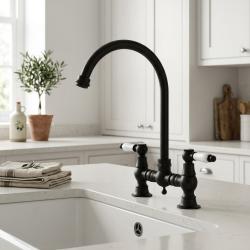
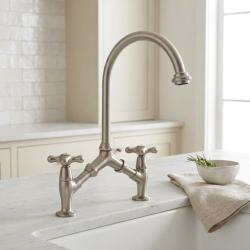
A bridge tap has two separate valve bodies, one for hot, one for cold, connected by a visible horizontal bridge or arch that the spout sits on or rises from. This is structurally different from a single-lever mixer, where hot and cold blend inside one cartridge hidden beneath a single spout base. The bridge tap's mechanism is visible by design, which is exactly what makes it read as traditional and exactly what makes it a poor fit for a kitchen built around minimal, hidden hardware.
Does Your Kitchen Style Actually Fit?
Works well:
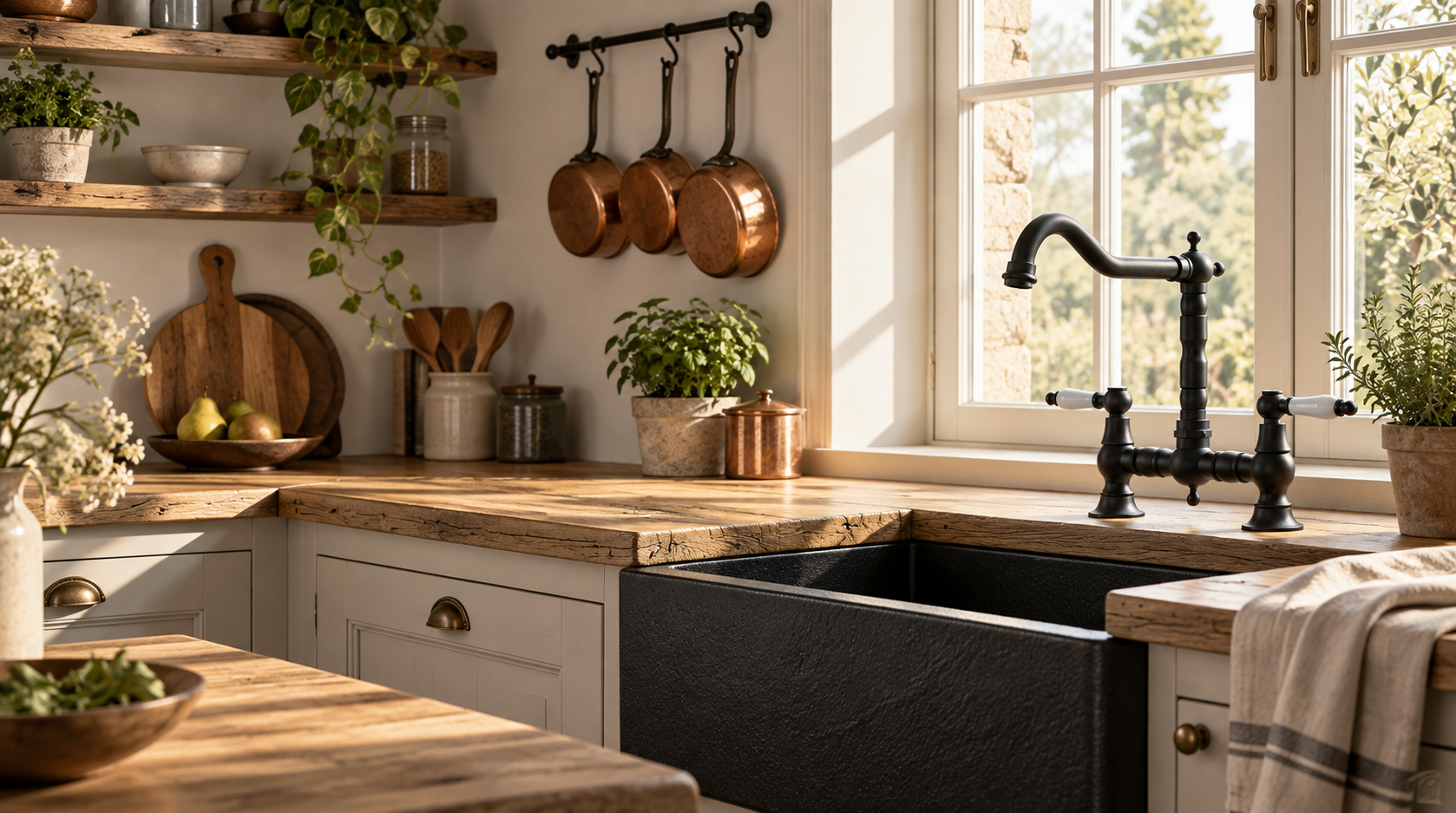
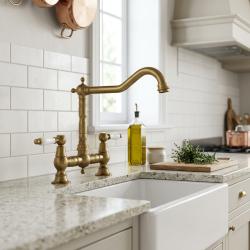
- Traditional kitchens with raised-panel cabinetry and classic color schemes, where visible craftsmanship is already part of the design language. Brass, bronze, or polished nickel bridge taps reinforce that character directly.
- Farmhouse and country kitchens, where showing how a fixture works fits the style's practicality-focused origins. Pairs naturally with an apron-front sink, butcher block counters, or open shelving.
- Transitional kitchens, where a bridge tap can anchor the traditional side of a blended scheme, provided other traditional elements support the choice rather than the tap standing alone.
Works poorly:
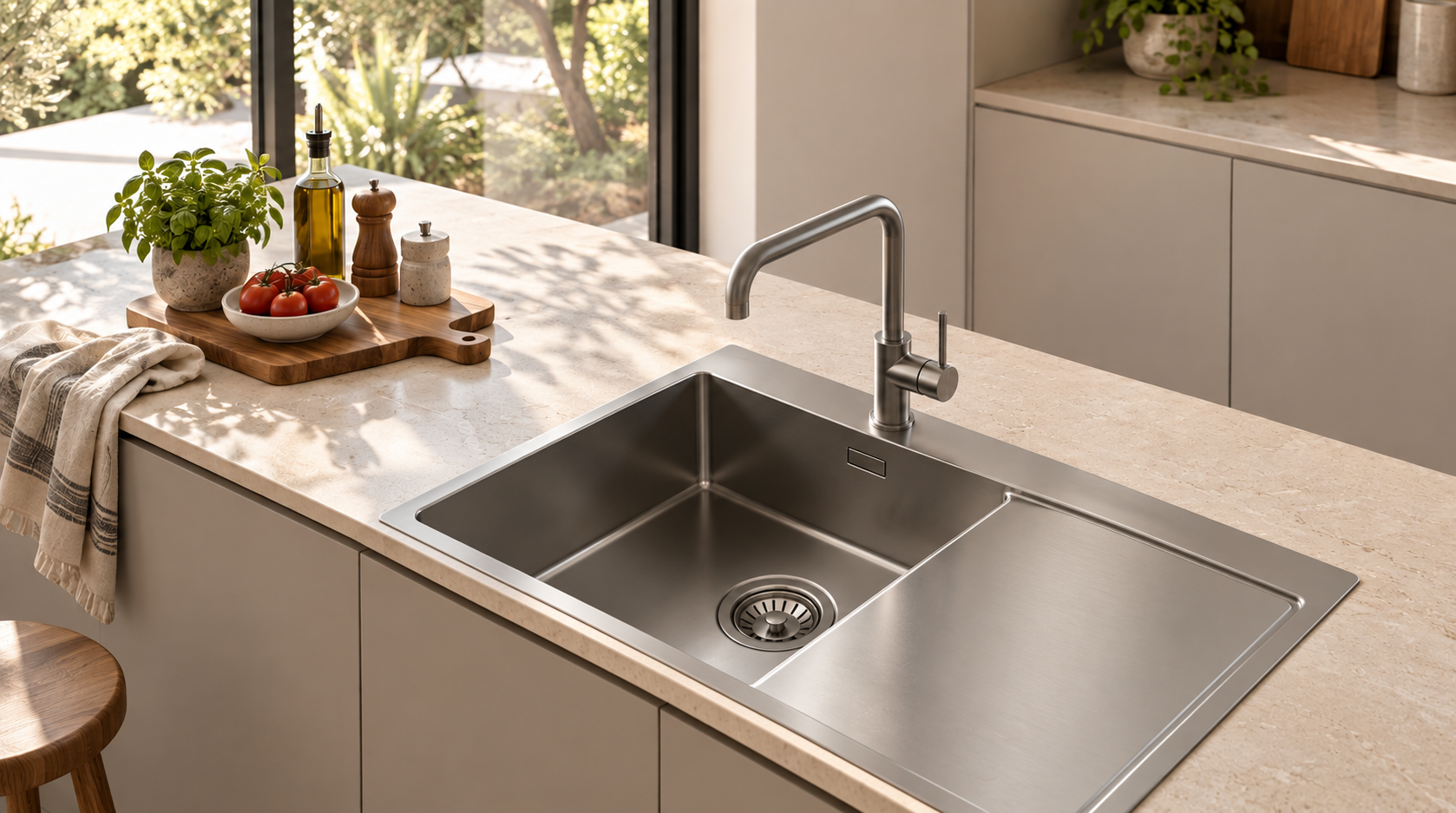
- Contemporary and minimalist kitchens, where the visible valve structure contradicts the clean, integrated look the style is built around. A bridge tap here tends to read as an odd choice rather than a deliberate one.
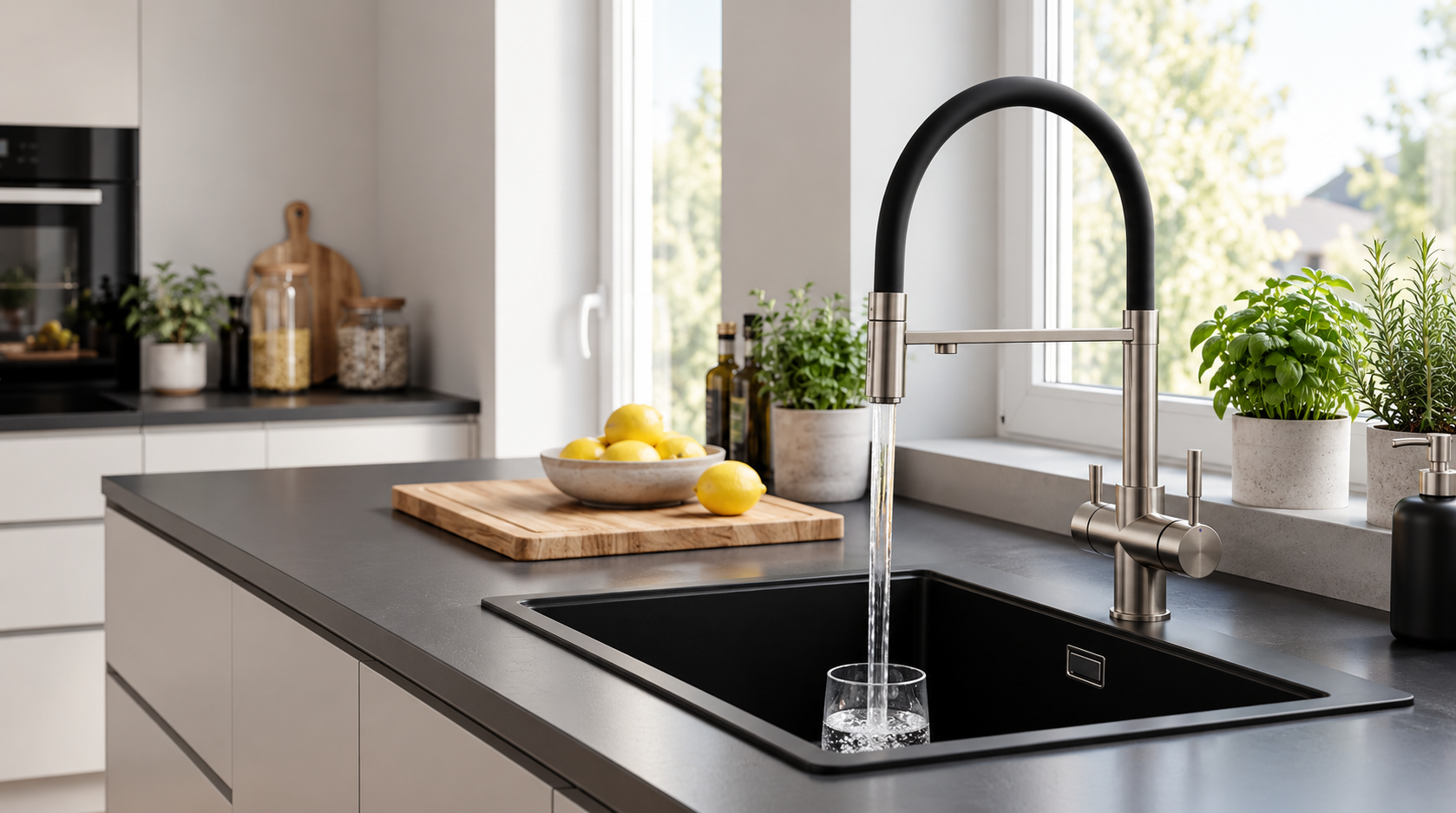
- Modern kitchens generally suit a streamlined single-lever mixer better, though an industrial-modern kitchen occasionally embraces the mechanical visibility as a deliberate contrast.
Depends on the kitchen:
- Eclectic kitchens that already mix periods and styles deliberately can accommodate a bridge tap on its own terms, since the usual style-matching logic doesn't apply the same way.
Will It Physically Fit Your Sink and Counter?
This is the check most people skip, and it's the one that actually determines whether the tap you want will work.
Hole configuration. A bridge tap needs three separate holes, spaced for the two valve bodies plus the spout if it mounts separately, most commonly at 203mm (8-inch) spacing, though some models use 152mm (6-inch). A sink with only a single pre-drilled hole can't accept a bridge tap without either drilling additional holes or using a deck plate that covers the gap, a route that works for some installations but changes the tap's final footprint, so check it against the specific model before ordering.
Counter depth behind the sink. A bridge tap extends further back than a single-point mixer, since its valve bodies sit apart rather than stacked into one base. Measure the available depth behind the sink against the specific tap's footprint before ordering; a shallow counter run can leave too little clearance for the valves to sit properly.
Backsplash clearance. Check that the handles have full room to rotate without striking the backsplash. A handle that contacts the backsplash mid-turn doesn't just look wrong, it physically can't reach full open or closed.
Counter material, if new holes are needed. Granite, quartz, and solid surface counters can be drilled for additional holes, but this is professional work, not a DIY job. Laminate counters with a particleboard substrate generally don't hold up well to additional drilling. A stainless steel sink's holes are typically fixed at manufacture and can't be modified at all.
How You Actually Cook Matters More Than It Seems
Multi-tasking cooks (hands constantly moving between ingredients, pots, and tools) may find two-handle operation marginally slower than a single lever adjusted with one hand. Bridge taps work fine here, they just ask for slightly more attention during use.
Bakers and bread-makers often prefer two-handle control specifically, since adjusting temperature while holding flow steady, important when a sudden temperature shift matters, works intuitively with independent handles.
Anyone who mostly uses cold water may find opening just the cold handle more direct than positioning a single lever precisely to cold-only.
Households with grip limitations should check handle style specifically rather than assuming all bridge taps are the same. Traditional cross handles need more grip strength than lever handles, and bridge taps are available with lever handles that accommodate a wider range of grip capability.


What a Bridge Tap Actually Costs You, Beyond the Price Tag
Bridge taps generally cost more than a comparable single-lever mixer, reflecting their position as a specialty traditional fixture rather than a mass-produced standard. Installation also runs slightly higher than a single-hole tap, mainly due to the alignment work needed to get both valve bodies and the spout seated correctly.
They also need marginally more upkeep than a single-cartridge mixer, simply because there are two valve mechanisms and more connection points instead of one. This is separate from finish-related maintenance (polished brass needing more attention than chrome or PVD, for instance), which applies to any tap regardless of whether it's a bridge design or a single-lever mixer.
Parts availability is generally good for bridge taps from established manufacturers. It's worth checking this specifically for less common brands, since a specialty fixture style from an obscure manufacturer can be harder to source replacement parts for years down the line than a mainstream single-lever mixer would be.
Quick Decision Table
|
Factor |
Bridge tap fits |
Bridge tap doesn't fit |
|
Kitchen style |
Traditional, farmhouse, transitional |
Contemporary, minimalist |
|
Sink holes |
Three holes, or willing to drill/adapt |
Single hole, no modification planned |
|
Counter depth behind sink |
Confirmed against tap's specific footprint |
Shallow run, not yet measured |
|
Backsplash clearance |
Full handle rotation confirmed |
Handle would strike backsplash |
|
Cooking style |
Comfortable with two-handle operation |
Wants fast single-lever adjustment |
|
Features wanted |
Traditional character, visible mechanism |
Pull-out spray, touchless operation |
|
Budget |
Comfortable with a price premium over a standard mixer |
Budget tightly constrained |
Common Mistakes
- Choosing a bridge tap purely because it's considered period-appropriate for a traditional kitchen, without checking it against personal cooking habits and daily use
- Ordering before confirming the sink's hole configuration and spacing against the specific tap model
- Not measuring counter depth behind the sink before ordering, then finding the valve bodies don't clear the backsplash properly
- Assuming maintenance demands come from the bridge design itself, when much of it actually comes from finish choice (unlacquered brass vs. chrome or PVD)
- Overlooking that bridge taps rarely offer pull-out spray or touchless operation, features some kitchens genuinely need
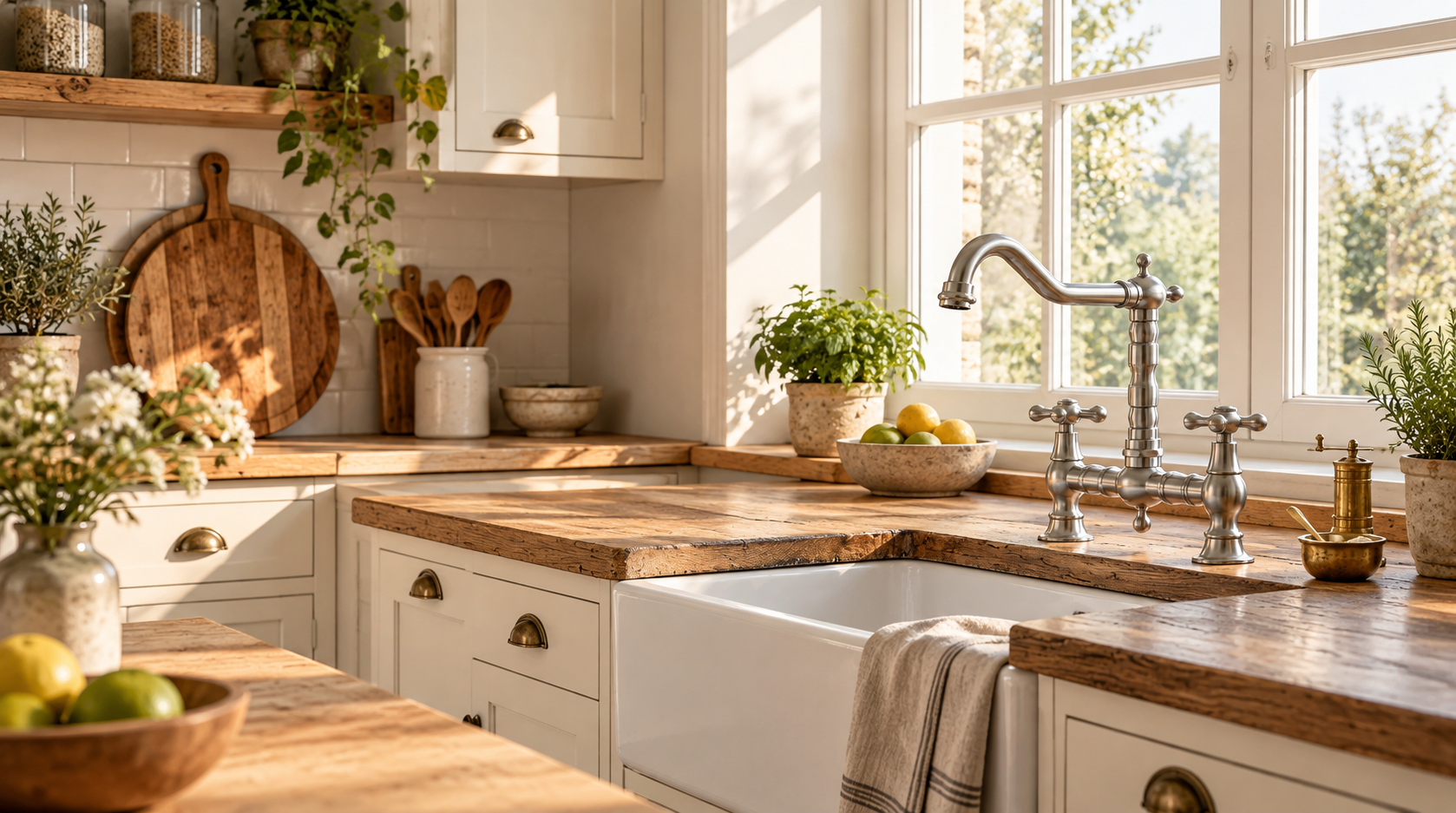
A bridge tap fits a traditional, farmhouse, or transitional kitchen with three-hole sink compatibility and a household comfortable with two-handle operation. It doesn't fit a contemporary or minimalist kitchen, a single-hole sink without modification, or a household that specifically wants touchless or pull-out features. Check style and physical fit separately before deciding, since either one failing on its own rules the choice out.
FAQ
How many holes does a bridge tap need?
Three: two for the valve bodies and one for the spout if it mounts separately, most commonly spaced at 203mm (8 inches), though some models use 152mm (6 inches) spacing. Check the specific tap's required spacing against your sink before ordering.
Can I install a bridge tap on a single-hole sink?
Not without modification. This typically means drilling additional holes, professional work in granite, quartz, or stone, or using a deck plate to adapt the mounting, which changes the tap's final footprint. Check compatibility with the specific tap model before committing to this route.
Do bridge taps need more maintenance than standard mixer taps?
Slightly, due to having two valve mechanisms and more connection points rather than one. Much of the maintenance difference people attribute to bridge taps actually comes from finish choice, unlacquered brass needs more polishing than chrome or PVD regardless of tap style.
Are bridge taps more expensive than standard mixer taps?
Generally yes, both in purchase price and installation, since alignment work for two separate valve bodies takes more time than fitting a single-hole mixer. Quality bridge taps tend to hold their aesthetic value well over time, which offsets some of the premium for buyers planning to keep the fixture long-term.
Will a bridge tap work in a contemporary kitchen?
Not usually well. The visible valve structure that makes a bridge tap suit a traditional kitchen works against the clean, integrated look a contemporary or minimalist kitchen is built around. An industrial-modern kitchen is the occasional exception, where the visible mechanism reads as a deliberate design choice rather than a mismatch.
Can I get a bridge tap with pull-out spray or touchless operation?
Rarely. Most bridge tap designs don't offer these features, since the format prioritizes traditional mechanical character over the added hardware those features need. If pull-out spray or touchless operation is a must-have, a bridge tap is unlikely to be the right fit regardless of kitchen style.
How much extra counter clearance does a bridge tap need?
More than a single-point mixer, since the two valve bodies sit apart rather than stacked into one base, extending the tap's footprint further back from the sink. Measure the counter depth behind your sink against the specific tap's dimensions before ordering, rather than assuming standard clearance is sufficient.